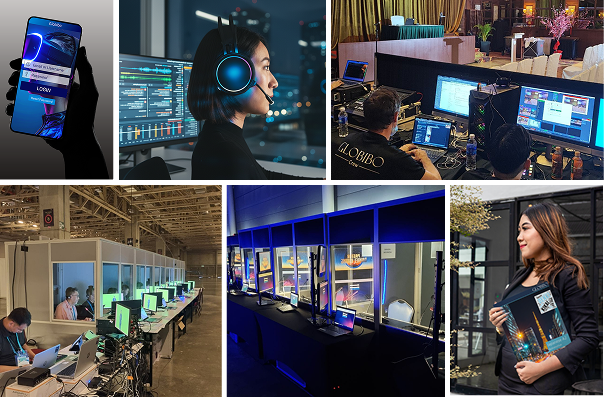
As events become increasingly global, the challenge of language diversity is now front and center. From international conferences to corporate summits, and from hybrid expos to government forums — audiences today span dozens of countries and languages. In this multilingual reality, Live AI Translation is emerging as one of the most transformative technologies in event communication.
Powered by artificial intelligence, natural language processing (NLP), and speech recognition, Live AI Translation enables participants to understand and engage with speakers in real time — no matter what language they speak. This revolution is not just about convenience; it’s about inclusion, accessibility, and engagement on a global scale.
Why Language Is Still the Biggest Barrier in Global Events
Language barriers have long limited the reach and inclusivity of international events. Traditional simultaneous interpretation systems, though effective, come with logistical and financial challenges — from hiring interpreters and setting up booths to managing multi-channel equipment.
In a world where virtual and hybrid events have become the new norm, organizers face added complexity. Attendees join from every corner of the world, and expecting everyone to understand one common language isn’t realistic anymore.
That’s where AI-powered live translation fills the gap. With real-time voice recognition and instant translation capabilities, it delivers multilingual event communication that scales effortlessly — online, onsite, or in hybrid formats.
What Is Live AI Translation?
Live AI Translation refers to the use of artificial intelligence to translate spoken language in real time during live events. Unlike static translation or human-based systems, this technology leverages speech-to-text AI, neural machine translation (NMT), and text-to-speech (TTS) to create an end-to-end translation flow.
Here’s how it works:
- Speech recognition (ASR) captures the speaker’s voice and converts it into text.
- AI translation models interpret the text, ensuring accuracy and contextual relevance.
- The output is delivered as translated speech or subtitles in the listener’s chosen language.
This process happens in milliseconds, allowing seamless interaction between speakers and audiences who don’t share the same native language.
Why the Demand for Live AI Translation Is Rising
1. Globalization of Events and Conferences
Today’s events aren’t local anymore. A tech summit in Singapore may feature speakers from Germany, investors from the U.S., and participants from Japan.
AI translation for global events ensures everyone receives the same message instantly, eliminating language-based exclusion and enabling broader participation.
2. Growth of Virtual and Hybrid Formats
The rise of hybrid events has expanded audience diversity more than ever before. Traditional interpretation setups struggle in these environments, but AI translation systems integrate easily with event platforms, providing real-time multilingual audio and captions to online and offline participants alike.
3. Cost and Scalability Advantages
Hiring professional interpreters for multiple languages is resource-intensive. AI translation offers a cost-effective alternative that scales to dozens of languages simultaneously. Event organizers can now reach more audiences without ballooning translation costs.
4. Demand for Accessibility and Inclusion
Live AI Translation promotes inclusivity by supporting participants with hearing impairments and non-native speakers through live captions and subtitled streams. This not only aligns with accessibility goals but also enhances audience satisfaction and engagement.
5. Rapid Advancements in AI Accuracy
Early AI translators struggled with tone and context, but with modern neural language models and domain-specific training, the accuracy levels now approach professional human interpretation — especially in structured environments like conferences, lectures, and keynotes.
How Live AI Translation Works in Event Environments
On-Site Events
For physical conferences and exhibitions, Live AI Translation integrates with existing AV systems and headsets. Attendees simply select their preferred language via a mobile app or event device and receive real-time interpretation — all powered by cloud or edge-based AI engines.
Virtual Events
For online events, AI translation is embedded directly into event streaming platforms. Participants can choose their output language, with translations appearing as live subtitles, audio streams, or both. It’s a seamless experience that keeps remote audiences fully connected.
Hybrid Events
Hybrid events combine both worlds — and AI translation thrives here. With AI-driven synchronization between in-person and virtual attendees, everyone receives synchronized, translated output across channels, ensuring a uniform multilingual experience.
Benefits of Using Live AI Translation in Global Events
1. Real-Time Multilingual Engagement
Participants can listen, learn, and interact instantly in their preferred language — transforming passive attendees into active contributors.
2. Increased Event Reach
Organizers can attract a wider international audience since language is no longer a limitation. This boosts event attendance, sponsorship appeal, and overall visibility.
3. Consistency and Reliability
Unlike human interpreters who may vary in style or expertise, AI models deliver consistent translation quality, reducing the risk of misunderstanding during technical or policy-driven discussions.
4. Enhanced Content Longevity
AI systems can generate transcriptions and translations of all sessions, providing valuable post-event resources like multilingual transcripts, blogs, and summaries — enhancing the ROI of event content.
5. Data Insights and Customization
Advanced systems, like those used in AI-powered event analytics, also provide feedback on which languages were most used, helping organizers tailor future content strategies and optimize audience engagement.
Industries Driving the Demand for Live AI Translation
- Technology Conferences: Global innovation summits attract developers and investors from around the world — requiring fast, accurate translation for technical terms.
- Government & Policy Forums: Multinational dialogues need multilingual support to ensure clarity and compliance.
- Corporate Summits: Multinational corporations use AI translation to unite regional teams during annual conferences.
- Education & Training Events: Universities and training institutions use AI translation to support international students and researchers.
- Healthcare & Medical Congresses: AI translation enables precise communication of complex medical data across borders.
AI Translation vs. Traditional Interpretation in Events
| Criteria | Human Interpretation | AI-Powered Translation |
| Setup | Requires booths, consoles, and multiple interpreters | Cloud-based, minimal setup |
| Languages Supported | Limited by interpreter availability | Dozens supported simultaneously |
| Cost | High, scales with languages | Lower, scalable model |
| Speed | Sequential or slightly delayed | Instant, real-time |
| Consistency | Varies by human interpreter | Consistent across sessions |
| Data Analytics | Not available | Built-in engagement insights |
Hybrid approach remains the future — where AI handles real-time translation while human editors review key transcripts for nuance.
Challenges in AI Event Translation (and How They’re Being Solved)
While the demand is growing, event organizers should be aware of a few implementation challenges:
- Contextual Accuracy: Continuous model training with event-specific data improves precision.
- Accent & Dialect Handling: Modern ASR models now adapt to diverse accents using global datasets.
- Latency Issues: Edge computing and 5G connectivity minimize delays.
- Confidentiality: Encrypted cloud environments and GDPR compliance ensure data protection during live sessions.
The Future of Live AI Translation in Global Events
As AI technology continues to evolve, the possibilities for event communication are endless. Future systems will likely include:
- Emotion-aware translation, preserving tone and speaker intent.
- Automatic session summaries in multiple languages.
- Personalized translation feeds using attendee preferences.
- Integration with AR/VR event platforms, enabling immersive multilingual environments.
Ultimately, Live AI Translation will become a default feature in global event ecosystems, enabling truly borderless communication.
Conclusion: Bridging Worlds Through AI
Language has always been a bridge — and now, with AI-powered live translation, it’s a digital bridge that connects thousands in real time. For organizers, it means broader reach, lower costs, and enhanced engagement. For participants, it means understanding and inclusion regardless of language.
As global collaboration deepens, Live AI Translation isn’t just a feature — it’s the foundation of how the world will communicate at the next generation of global events.
Related articles on AI Translation
-
- How AI Translation Is Powering Multilingual Learning Environments
- Best practices for using Live AI Translation in Hybrid Events
- The Growing Demand for Live AI Translation in Global Event
- How Governments Use AI Translation to Improve Transparency and Inclusivity
- Live AI translation for Court Hearings and Legal Conferences
- Enhancing Guest Experience with Live AI Translation in Hospitality
- Transforming Global Classrooms with Live AI Translation
- Live AI Translation vs Human Interpreters: Which Fits Your Event Best?
- How Accurate Is Live AI Translation for Global Conferences?
- Can AI Translation Match Human Interpreters in Legal Accuracy?