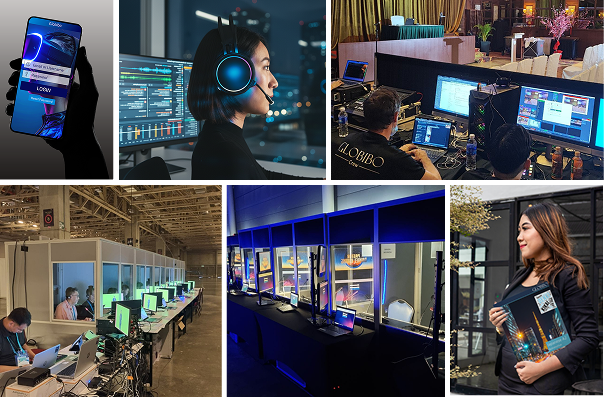
Conference equipment encompasses a broad range of audio-visual equipment and devices engineered to enhance communication, collaboration, and information dissemination during meetings, seminars, conferences, and various other event technology tools. This equipment supports the interaction between participants regardless of their geographical location or the event’s scale.
The spectrum of conference equipment spans basic audio systems, such as microphones and speakers, to sophisticated technologies, including video conferencing systems, translation devices, and augmented reality (AR) tools. These devices enable functionalities like remote attendance, simultaneous translation, live streaming, and interactive presentations.
In the contemporary business environment characterized by the rise of remote work, globally distributed teams, and digital communication, conference equipment has become increasingly indispensable. Organizations invest substantially in high-quality audiovisual technology to ensure seamless operation of their conferences, characterized by clear audio, reliable video, and user-friendly interfaces. Beyond business, the right conference equipment finds applications in sectors like education, healthcare, and government. For instance, remote learning and telemedicine leverage audiovisual equipment to facilitate communication and learning among remote students, patients, and medical professionals.
Classification of Conference Equipment Audio Communication Tools

Audio communication tools are pivotal for ensuring clear and effective communication among conference participants. These tools include:
- Microphones:
- Types: Wired, wireless, lapel, and handheld.

- Functions: Capture and transmit audio signals to speakers or recording devices.
- Advanced Features: Noise cancellation, directional pickup patterns.
- Types: Wired, wireless, lapel, and handheld.
Speakers: 
-
- Types: Standalone, integrated, ceiling-mounted.
- Functions: Amplify audio signals for audience clarity.
- Advanced Features: Surround sound, adjustable equalization.
- Sound Systems:
- Components: Mixers, amplifiers, and audio processors.
- Functions: Combine and enhance audio signals for optimal output
- Advanced Features: Acoustic echo cancellation, feedback suppression.
- Visual Communication Tools for Conference Equipment
- Visual communication tools facilitate the sharing of visual content and real-time interaction among participants.
- These tools include:
- Video Conferencing Systems:
- Components: Cameras, video codecs, display monitors.
- Functions: Enable real-time visual and auditory interaction among remote participants.
- Advanced Features: High-definition (HD) and 4K resolution, virtual backgrounds, and screen sharing.
- Projection Screens:
- Types: Fixed, retractable, portable.
- Functions: Display visual content from projectors.
- Advanced Features: Interactive touch capabilities, high-gain surfaces.
- Monitors:
- Types: LCD, LED, OLED.
- Functions: Provide high-resolution display for visual aids and presentations.
- Advanced Features: Ultra-wide screens, touch sensitivity, 8K resolution.
Remote Collaboration Tools for Conference Equipment
Remote collaboration tools integrate both audio and visual elements to facilitate seamless interaction among participants in different locations. These tools include:
- Online Collaboration Platforms:
- Examples: Microsoft Teams, Slack, Asana.
- Functions: Enable document sharing, real-time messaging, and task management.
- Advanced Features: Integration with other software tools, and workflow automation.
- Virtual Whiteboards:
- Examples: Miro, Jamboard.
- Functions: Provide a digital space for brainstorming and visual collaboration.
- Advanced Features: Multi-user input, template libraries.

Interpretation and Translation Tools for Conference Equipment
Interpretation Equipment and translation tools support multilingual communication during virtual conferences. These tools include:
-
Translation Devices:
- Types: Handheld, app-based.
- Functions: Translate spoken language into multiple languages in real time.
- Advanced Features: AI-based translation, and context recognition.
-
Simultaneous Interpretation Systems:
- Components: Interpreter consoles, headsets, transmitters.
- Functions: Allow interpreters to provide real-time translation for participants.
- Advanced Features: Digital transmission, multiple language channels.

Recording Devices for Conference Equipment
Recording devices capture audio and visual content from conferences for later review, sharing, or archival purposes. These devices include:
- Cameras:
- Types: PTZ (Pan-Tilt-Zoom), fixed, wearable.
- Functions: Record high-quality videos of presentations and discussions.
- Advanced Features: 360-degree capture, automatic tracking.
- Audio Recorders:
- Types: Digital, analog, app-based.
- Functions: Capture high-fidelity audio of conference proceedings.
- Advanced Features: Voice activation, multiple microphone inputs.

Key Roles of Conference Equipment
Conference equipment plays a vital role in facilitating various functions essential for successful meetings and events:
Enhancing Communication
- Audio Communication:
- Ensures participants can hear each other clearly.
- Reduces background noise with advanced audio technologies.
- Visual Communication:
- Enables visual interaction, enhancing engagement and understanding.
- Facilitates the sharing of visual aids, such as presentations and videos.
Promoting Remote Collaboration
- Video Conferencing:
- Allows real-time interaction among geographically dispersed participants.
- Supports remote presentations and discussions.
- Online Collaboration Tools:
- Enable document sharing and real-time collaboration on tasks.
- Enhance productivity by integrating with other business applications.
Supporting Multilingual Communication
- Interpretation Systems:
- Provide real-time translation for multilingual audiences.
- Facilitate understanding and communication across different languages.
- Translation Devices:
- Translate spoken language into multiple languages instantly.
- Support international collaboration and communication.
Recording and Archiving
- Video Recording:
- Captures high-quality video for future reference or distribution.
- Enables participants to review or share content post-event.
- Audio Recording:
- Records discussions and presentations for later playback.
- Provides an archive of important information and insights.
Conference Software and Applications for Conference Equipment
Conference software and applications are digital tools designed to enhance various conference management and participation aspects. These tools include:
Conference Management Software
- Functions:
- Manage event registration, scheduling, and attendee engagement.
- Analyze post-event metrics and feedback.
- Examples:
- Cvent, Eventbrite, Whova.
- Advanced Features:
- Integration with CRM systems, and customizable workflows.
Virtual Event Platforms
- Functions:
- Host virtual conferences and webinars.
- Enable remote participation and interaction.
- Examples:
- Zoom, Hopin, ON24.
- Advanced Features:
- Virtual exhibition halls, networking lounges, interactive sessions.
Mobile Apps
- Functions:
- Provide real-time information and updates for attendees.
- Facilitate networking and engagement through interactive features.
- Examples:
- EventMobi, CrowdCompass.
- Advanced Features:
- Augmented reality integration, interactive maps, real-time polling.
Video Conferencing Software
- Functions:
- Enable real-time video and audio communication.
- Support remote participation in meetings and conferences.
- Examples:
- Microsoft Teams, Zoom, Webex.
- Advanced Features:
- Breakout rooms, virtual backgrounds, live transcription.
Collaboration Tools
-
-
- Functions:
- Facilitate real-time collaboration on documents and projects.
- Provide tools for brainstorming and visual collaboration.
- Examples:
- Miro, Slack, Trello.
- Advanced Features:
-
-
-
-
- Integration with project management software and customizable templates.
-
-
-
-
- Functions:
-
Case Studies and Research for Conference Equipment
Case Study 1: Integration of Augmented Reality in Conferences
Objective: Evaluate the effectiveness of augmented reality (AR) tools in enhancing participant engagement during conferences.
Methodology:
- Participants: 150 attendees at a tech conference.
- Tools: AR headsets, interactive AR applications.
- Metrics: Engagement levels, participant feedback, interaction rates.
Results:
- Increased Engagement: 85% of participants reported higher engagement with AR-enhanced presentations.
- Positive Feedback: 90% rated the AR tools as effective in enhancing their conference experience.
- Higher Interaction Rates: Sessions with AR tools saw a 70% increase in audience interaction compared to traditional sessions.
Case Study 2: Impact of Video Conferencing on Remote Collaboration
Objective: Assess the impact of audio & video conferencing systems on remote collaboration among globally distributed teams.
Methodology:
- Participants: Employees from a multinational corporation.
- Tools: High-definition video conferencing systems, and collaboration platforms.
- Metrics: Collaboration frequency, meeting efficiency, participant satisfaction.
Results:
- Improved Collaboration: 75% of teams reported improved collaboration frequency.
- Enhanced Meeting Efficiency: Meetings were 50% shorter on average, with clearer outcomes.
- High Satisfaction: 80% of participants expressed satisfaction with the video conferencing systems.
Technological Advancements and Trends in Conference Equipment
- Integration of Artificial Intelligence:
- AI-powered tools for real-time translation equipment, meeting summarization, and participant analytics.
- Enhanced interaction through virtual assistants and chatbots.
- Adoption of Virtual and Augmented Reality:
- Use of VR and AR for immersive conference experiences.
- Interactive presentations and virtual networking environments.
- Increased Focus on Security and Privacy:
-
- Advanced encryption and data protection measures.
- Compliance with international data privacy regulations.
Future Developments
- 5G Connectivity:
- Enhanced bandwidth for high-quality video and real-time collaboration.
- Lower latency for smoother interactions and streaming.
- Cloud-Based Solutions:
- Increased adoption of cloud platforms for scalability and flexibility.
Academic References on Conference Equipment
-
Computer and telecommunications equipment room cooling: a review of literature
-
Influence of digital equipment on interaction quality in a technology-rich classroom
-
Influence of technical condition parameters on the residual resource of capacitive equipment
-
Design of mechanical properties of structural materials for power plant equipment
-
Acoustics recognition of construction equipment based on LPCC features and SVM
-

Rick Lee
Project Manager – Event Technology
Email: rick.lee@globibo.com
Case Study: Large-scale interpretation with event tech support
News: Globibo provided tour-based interpretation for an event company in Malaysia
Portfolio: Event Technology, Events Studio
With over 10 years of experience in event technology, Rick is an expert in integrating cutting-edge tech solutions for seamless event execution. His expertise includes tour guide system setup, audio-visual setups, interactive displays, and live-streaming technologies. Rick’s innovative approach ensures every event is technologically advanced and highly engaging.
Youtube Video on Conference Equipment
Key Articles on Conference Equipment
1. Why you need Conference Equipment to Prepare you for your Post Covid-19 Business Meetings
Conference equipment facilitates easy communication in a meeting, presentation, or conference. They contain audio and video hardware.
2. How the Right Conference Equipment Can Make Your Event Effective
In a corporate atmosphere, whether a conference is being held to address a local audience or an international one, equipment plays a major role in its success.
3. Equipment Needed in a Conference
The smooth execution of any conference meeting will require some equipment. You can either purchase or rent them.
4. Importance of Audio-Visual Equipment in a Successful Conference
If an organization makes proper use of audiovisual equipment, clearly audible messages can be shared with the audiences and interaction can be encouraged.
5. Steps To Successfully Select A Web And Audio Conference Provider
This article outlines a comprehensive approach to evaluating and selecting a web and audio conference provider, ensuring that businesses can make informed decisions tailored to their specific needs.
6. Sustainability and Conference Equipment
In the current landscape of global environmental awareness, sustainability has become an essential focus in many industries, including event management and conferencing. Conferences often require a significant amount of equipment and resources, leading to considerable energy consumption, waste generation, and other environmental impacts.
7. Customizing Conference Equipment for Different Event Types
Customizing conference equipment is a critical process in event management that involves tailoring audio-visual (AV) and communication tools to suit specific types of events.
8. The Future of Conference Equipment: Innovations and Trends
The landscape of conferences and corporate events is undergoing a profound transformation, driven by technological advancements, changing workplace dynamics, and new expectations from participants.
9. Cost-Effective Conference Equipment Solutions
In today’s fast-paced world, hosting a successful conference requires not only effective planning but also the strategic selection of cost-effective conference equipment.
10 Enhancing Event Effectiveness: The Power of the Right Conference Equipment
The effectiveness of a conference or event is often closely tied to the quality and appropriateness of the equipment used. From ensuring clear communication to facilitating interactive engagement, the right conference equipment can make a significant difference in the success of an event.