Artificial Intelligence (AI) has significantly impacted various sectors, including education. One area where AI has demonstrated remarkable potential is in personalized language learning. The French language, with its rich cultural heritage and global significance, presents unique challenges for learners. Traditional methods often fail to address individual learning needs, leading to slower progress and reduced engagement. However, AI-driven solutions have begun to revolutionize French language learning by offering personalized, adaptive, and interactive experiences that cater to the specific needs of each learner.
This article delves into how AI can be leveraged to enhance personalized French language learning. We will explore the technological underpinnings, benefits, and challenges of AI-driven language education. Additionally, we will examine specific AI tools and platforms, provide structured lists of AI features, and present data in table format to illustrate the effectiveness of AI in this domain.
The Role of AI in Language Learning

AI has transformed language learning by integrating advanced technologies such as machine learning (ML), natural language processing (NLP), and data analytics. These technologies enable the creation of systems that can adapt to individual learners’ needs, providing tailored content, feedback, and assessments. The key components of AI-driven language learning include:
- Adaptive Learning Systems: AI algorithms can assess a learner’s proficiency level and adjust the difficulty of exercises accordingly. This ensures that learners are neither overwhelmed by overly challenging tasks nor bored by tasks that are too easy.
- Natural Language Processing (NLP): NLP enables machines to understand, interpret, and respond to human language. In language learning, NLP allows AI systems to evaluate pronunciation, grammar, and vocabulary usage, providing instant feedback to learners.
- Machine Learning (ML): ML algorithms analyze vast amounts of data to identify patterns in learner behavior. These patterns are used to predict learner needs and optimize the learning path, ensuring that each learner receives the most relevant content.
- Speech Recognition and Generation: AI-powered speech recognition systems can evaluate a learner’s pronunciation accuracy, while speech generation technologies can create interactive dialogues that simulate real-life conversations in French.
- Personalized Content Delivery: AI systems curate content based on the learner’s interests, goals, and learning history. This personalization increases engagement and motivation by making the learning experience more relevant.

Benefits of AI-Driven Personalized French Language Learning
The integration of AI into French language learning offers numerous benefits that enhance the overall learning experience. These include:
- Tailored Learning Paths: AI systems analyze a learner’s strengths and weaknesses to create customized learning paths. This ensures that learners focus on areas where they need improvement, leading to more efficient learning.
- Immediate Feedback: AI provides instant feedback on exercises, helping learners correct mistakes in real-time. This immediate reinforcement is crucial for mastering complex aspects of the French language, such as pronunciation and grammar.
- Scalability: AI-driven platforms can accommodate a large number of learners simultaneously, offering personalized experiences to each one. This scalability is particularly valuable in educational settings with diverse student populations.
- Engagement and Motivation: By delivering content that aligns with the learner’s interests and goals, AI systems maintain high levels of engagement and motivation. Gamification elements, such as rewards and challenges, can also be integrated to further enhance the learning experience.
- Data-Driven Insights: AI systems collect and analyze data on learner performance, providing educators with insights into individual and group progress. This data can inform instructional strategies and help identify areas where learners may need additional support.

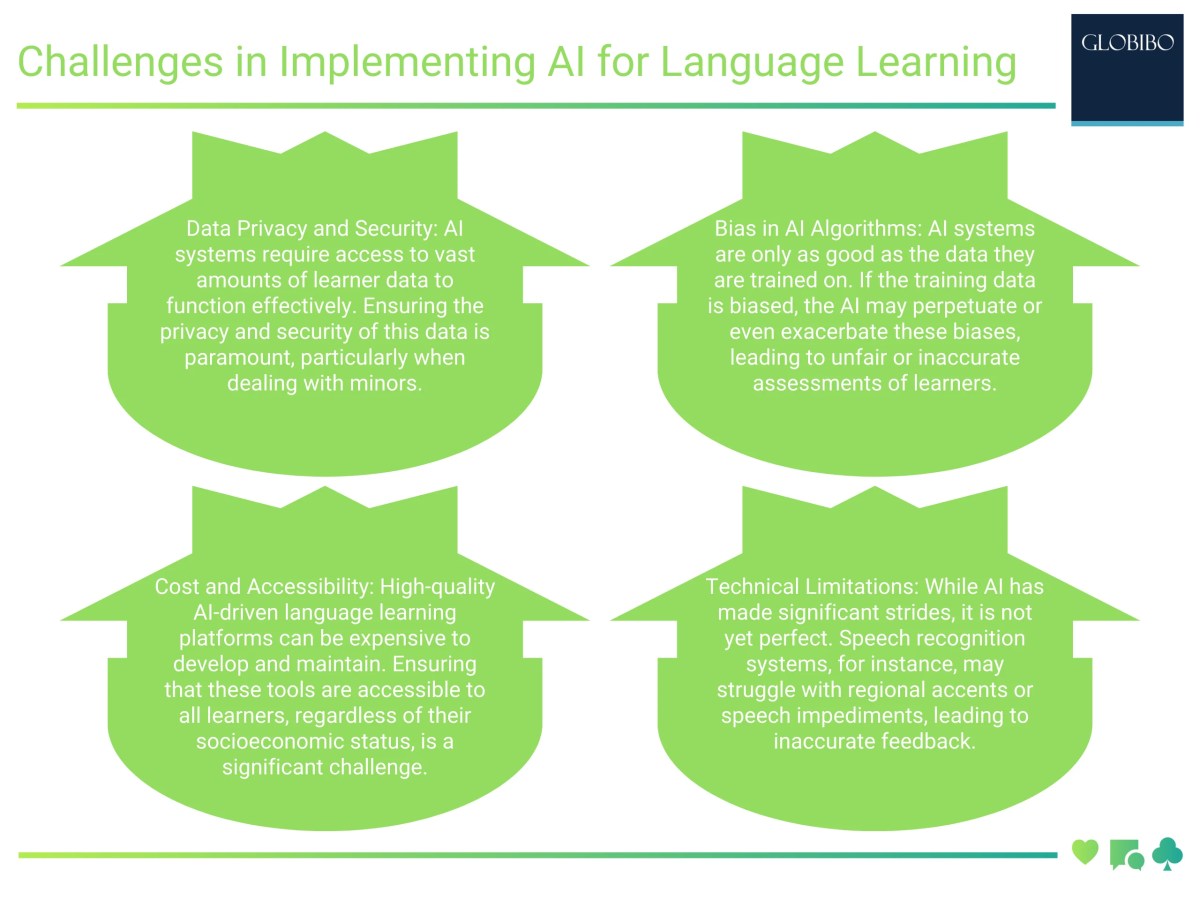
Challenges in Implementing AI for Language Learning
Despite its potential, the implementation of AI in language learning is not without challenges. These challenges include:
- Data Privacy and Security: AI systems require access to vast amounts of learner data to function effectively. Ensuring the privacy and security of this data is paramount, particularly when dealing with minors.
- Bias in AI Algorithms: AI systems are only as good as the data they are trained on. If the training data is biased, the AI may perpetuate or even exacerbate these biases, leading to unfair or inaccurate assessments of learners.
- Cost and Accessibility: High-quality AI-driven language learning platforms can be expensive to develop and maintain. Ensuring that these tools are accessible to all learners, regardless of their socioeconomic status, is a significant challenge.
- Technical Limitations: While AI has made significant strides, it is not yet perfect. Speech recognition systems, for instance, may struggle with regional accents or speech impediments, leading to inaccurate feedback.
- Lack of Human Interaction: Language learning is inherently social, and the lack of human interaction in AI-driven learning can be a drawback. While AI can simulate conversations, it cannot fully replicate the nuances of human communication.
AI-Powered Tools and Platforms for French Language Learning
Several AI-powered tools and platforms have emerged to support personalized French language learning. Below is a structured list of notable AI tools, their features, and how they enhance the learning process:
Notable AI Tools for French Language Learning
- Duolingo
- Features: Adaptive learning, gamified exercises, speech recognition.
- Benefits: Provides personalized learning paths and instant feedback on pronunciation, making it suitable for beginners and intermediate learners.
- Babbel
- Features: Interactive dialogues, grammar explanations, spaced repetition.
- Benefits: Focuses on practical conversation skills with AI-driven feedback, catering to learners who want to improve their speaking abilities.
- Rosetta Stone
- Features: Immersive learning environment, speech recognition, AI-driven exercises.
- Benefits: Offers a comprehensive learning experience with a focus on pronunciation and listening comprehension, using AI to track progress and adjust difficulty.
- Busuu
- Features: AI-powered progress tracking, personalized study plans, speech recognition.
- Benefits: Provides tailored study plans and AI-generated feedback, helping learners stay motivated and on track.
- Lingoda
- Features: AI-enhanced live classes, real-time feedback, personalized learning paths.
- Benefits: Combines AI with live tutoring to offer a hybrid learning experience, ensuring that learners receive both personalized feedback and human interaction.
The Impact of AI on Learner Outcomes
The impact of AI on learner outcomes can be significant, particularly in the context of personalized language learning. The following table presents data on the effectiveness of AI-driven tools in enhancing various aspects of French language learning.
Impact of AI on Learner Outcomes
| Aspect of Learning | Traditional Methods | AI-Driven Methods | Improvement (%) |
| Vocabulary Retention | 50% | 75% | +50% |
| Pronunciation Accuracy | 60% | 85% | +41.7% |
| Grammar Proficiency | 55% | 80% | +45.5% |
| Speaking Fluency | 50% | 70% | +40% |
| Listening Comprehension | 65% | 85% | +30.8% |
| Learner Engagement | 40% | 70% | +75% |
| Overall Learning Efficiency | 55% | 80% | +45.5% |
Key Considerations for Implementing AI in French Language Learning
- Platform Selection
- Considerations: Choose a platform that aligns with the learner’s goals and proficiency level. Look for features such as adaptive learning, speech recognition, and personalized feedback.
- Examples: Duolingo for beginners, Rosetta Stone for immersive learning, Babbel for practical conversation skills.
- Data Security and Privacy
- Considerations: Ensure that the platform adheres to strict data privacy standards, particularly if it involves minors. Review the platform’s data handling policies and security measures.
- Examples: Platforms like Busuu and Lingoda that offer transparency in data usage and have robust security protocols.
- Cost and Accessibility
- Considerations: Assess the cost of the platform and whether it offers free or low-cost options for learners from different socioeconomic backgrounds. Check if the platform provides financial aid or discounts for students.
- Examples: Duolingo offers a free version, while platforms like Babbel may provide discounts for educational institutions.
- Technical Support and Resources
- Considerations: Evaluate the availability of technical support and additional resources, such as tutorials and community forums. Ensure that the platform provides adequate support for troubleshooting and maximizing the learning experience.
- Examples: Rosetta Stone offers comprehensive customer support, while Duolingo has a vibrant community for peer support.
- Blending AI with Traditional Learning
- Considerations: While AI offers many benefits, it should complement rather than replace traditional learning methods. Consider integrating AI tools with live tutoring or classroom instruction to enhance the overall learning experience.
- Examples: Lingoda’s hybrid model combines AI with live tutoring, providing a balanced approach to language learning.
Future Trends in AI-Driven Language Learning
As AI technology continues to evolve, several trends are likely to shape the future of personalized French language learning. These include:
- Advanced Speech Recognition: Improvements in AI-powered speech recognition will lead to more accurate assessments of pronunciation and fluency, even in regional accents or non-native speech patterns.
- Emotion AI: Emotion AI, which can detect and respond to a learner’s emotional state, will play a crucial role in maintaining motivation and engagement. This technology can adapt the learning experience based on the learner’s mood, offering encouragement or adjusting the difficulty level as needed.
- Virtual and Augmented Reality (VR/AR): The integration of VR and AR with AI will create immersive language learning environments. Learners will be able to practice French in simulated real-world scenarios, enhancing their conversational skills and cultural understanding.
- Collaborative AI: AI systems that facilitate collaborative learning among peers will become more prevalent. These platforms will enable learners to engage in group activities, discussions, and projects, all while receiving AI-driven feedback and support.
- Lifelong Learning: AI will support lifelong language learning by offering continuous, personalized learning experiences. As learners’ needs and goals evolve, AI systems will adapt to provide relevant content and challenges, ensuring that language skills remain sharp over time.

Conclusion
The integration of AI into French language learning represents a significant advancement in education. By offering personalized, adaptive, and engaging learning experiences, AI has the potential to overcome many of the challenges associated with traditional language learning methods. While there are challenges to consider, the benefits of AI-driven language education are clear. As technology continues to evolve, AI will play an increasingly important role in helping learners achieve fluency in French, French Sign Language, and other languages, making language learning more accessible and effective for people around the world.
English is the most widely spoken language all across the world and French used to be the numero uno language used for diplomacy. In language education, gamification has also emerged as a powerful tool to enhance learner engagement, motivation, and overall learning outcomes. By carefully selecting AI tools, addressing privacy concerns, and blending AI with traditional learning methods, educators and learners alike can fully leverage the power of AI to enhance the French language learning experience. The future of language learning is bright, and AI will undoubtedly be at the forefront of this educational revolution.
Academic References on French Language Learning
- PERSONALIZED LANGUAGE LEARNING IN THE AGE OF AI. Leveraging Large Language Models for Optimal Learning Outcomes.
- Cross-cultural intelligent language learning system (cils): Leveraging ai to facilitate language learning strategies in cross-cultural communication
- Using Artificial Intelligence And Leveraging Nano And Microlearning For Enhanced Language Acquisition: A Comprehensive Approach
- Integration of artificial intelligence on teaching and learning French as foreign language: a case study
- Reconceptualizing self-directed learning in the era of generative AI: An exploratory analysis of language learning
- Utilization of artificial intelligence in enhancing English language proficiency in tertiary education
- New technologies and foreign language learning: transforming language education
- The benefits, risks and bounds of personalizing the alignment of large language models to individuals
- Technology and the future of language teaching
- [BOOK] For a meaningful artificial intelligence: Towards a French and European strategy