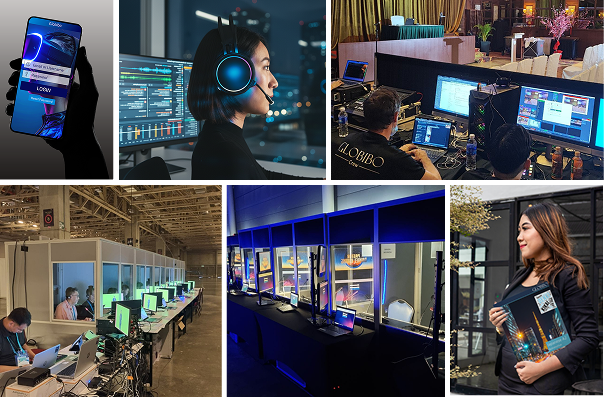
In 2026, Hybrid Interpretation—the strategic integration of onsite and remote language services—has become a critical mode of communication in globalized professional spaces. Beyond a mere response to post-pandemic shifts, hybrid models are now driving linguistic access in international conferences, healthcare, legal forums, and multinational enterprises. This article analyzes the contours of hybrid interpretation as of 2026, including its technological evolution, operational models, professional challenges, and future trajectory, grounded in current research and market data.
Introduction
Language services have traditionally differentiated between onsite interpretation—where interpreters are physically present—and remote interpretation, delivered through telecommunications. However, as cross-border collaboration intensifies, hybrid models that combine onsite presence with remote delivery are redefining best practices in interpretation for multilingual events and services. The hybrid model’s rise reflects broader trends in digital transformation, workforce dispersion, and demand for real-time multilingual access.
Defining Hybrid Interpretation
Hybrid interpretation refers to a structured language service solution that distributes interpreting tasks across both onsite and remote interpreters to serve audiences who attend events either physically or virtually. It is not merely co-locating two separate services; instead, it integrates technology and human expertise to deliver a consistent linguistic experience irrespective of participant location.
This model is increasingly necessary for global meetings, multinational conferences, cross-border healthcare consultations, and legal proceedings where participants may be distributed across regions but require seamless real-time interpretation.
Market Context and Growth Drivers in 2026
The interpreting services market continues to experience robust growth. In 2026, the global interpreting market is projected at USD 15.83 billion, with hybrid models a key driver of expansion. Remote and hybrid formats account for over one-third of adoption growth, driven by cloud-based platforms, globalized workforces, and enterprise reliance on multilingual communications.
Several macro-factors underpin the rise of hybrid interpretation:
- Globalization and mobility are expanding linguistic diversity in multinational businesses and international diplomacy.
- Digital transformation of enterprise workflows now embeds remote real-time interpretation into virtual collaboration tools.
- Cost-efficiency pressures favor hybrid solutions by reducing travel, equipment, and infrastructure costs associated with fully onsite services.
Technology Integration in Hybrid Interpretation
In 2026, the hybrid interpretation ecosystem depends heavily on advanced technologies:
1. Cloud-Based Platforms
Cloud platforms enable interpreters to deliver services remotely with low latency, integrate with meeting tools such as videoconferencing systems, and provide language channels directly to attendees’ devices. These platforms are foundational to hybrid deployment by connecting onsite and remote interpreters into a single communication flow.
2. Automatic Speech Recognition and AI Tools
Automatic Speech Recognition (ASR) and AI are increasingly effective at assisting interpretation workflows by capturing real-time transcripts and term banks. Pilot studies have demonstrated that ASR integration can improve interpreter quality by offering full transcripts and summaries that reduce errors and support cognitive load.
AI-enabled tools help with:
- Terminology consistency
- Accent and dialect support
- Speech-to-text transcription for accessibility
However, AI support is supplemental rather than substitutive; cultural nuance, context, and pragmatic interpretation still require human expertise.
3. Integration with Collaboration Software
Modern hybrid environments often integrate interpretation streams directly into enterprise software ecosystems—such as telehealth platforms, case-management systems, and enterprise communication suites—ensuring interpreters are part of the organizational workflow rather than an afterthought.
Operational Models of Hybrid Interpretation
Hybrid interpretation setups vary by event type, linguistic demand, and technological tools. Key models include:
1. Onsite Lead, Remote Support
A lead interpreter works from the venue, controlling key moments, while remote interpreters handle additional languages or back-channel support. This setup ensures on-site presence for the core audience while leveraging remote scalability.
2. Distributed Teams Across Locations
Interpreting teams are geographically dispersed, but coordinated through a central digital hub. This enables 24/7 coverage across time zones and caters to multinational audiences.
3. Dedicated Remote Nodes for Overflow Languages
For large events with many language channels, some interpreting seats are remote. Onsite staff manage receivers and audience logistics while remote interpreters focus on delivery.
Hybrid architectures provide flexibility that meets both cost and quality objectives.
Quality Assurance and Professional Standards
Ensuring quality within hybrid interpretation requires systematic standards spanning certification, technology, and operational practice. In 2026, industry consensus emphasizes:
- Professional accreditation of interpreters familiar with both onsite dynamics and remote platforms.
- Data security and privacy protocols to protect sensitive content in legal, medical, and government contexts.
- Workflow coherence to synchronize onsite and remote signals so that interpretation latency and audio quality meet service-level expectations.
While remote platforms offer cost advantages, quality assurance demands robust network infrastructure, interpreter training on hybrid tools, and live monitoring to prevent miscommunication.
Academic and Professional Research Trends
Academic research has increasingly examined hybrid and remote interpreting:
- Studies show the psychological and cognitive differences between onsite and remote interpretation, with remote work often reducing environmental stressors, though introducing technical challenges.
- Scholarship on integrated systems suggests remote interpretation is reshaping practitioner workflows and broadening the interpretation labor market.
Additionally, comparative studies of human versus machine or AI-assisted interpreting underscore that hybrid human-AI paradigms may enhance performance while preserving cultural and contextual accuracy.
Sectoral Applications of Hybrid Interpretation
1. International Conferences and Diplomacy
Hybrid interpretation ensures multilingual access for diplomats, academia, and global forums where participants may attend physically or remotely. It supports expanded audience reach without linguistic compromise.
2. Healthcare and Telemedicine
In healthcare, hybrid interpretation enables interpreters to work remotely with clinicians attending onsite consultations, balancing patient-centered care with language access needs. Evidence indicates that both remote and onsite interpretations are integral to patient satisfaction and comprehension in clinical settings.
3. Legal and Government Services
Hybrid interpretation is utilized in courtrooms and public hearings to allow legal teams and public stakeholders to engage across jurisdictions. Security and confidentiality protocols are critical in these contexts.
Challenges in Hybrid Interpretation
Despite its advantages, hybrid interpretation faces notable challenges:
- Technological disparities, such as bandwidth inconsistency, can affect audio fidelity and interpreter performance.
- Cognitive load dynamics differ for remote interpreters who lack physical cues from onsite speakers.
- Training and certification gaps remain for interpreters transitioning to hybrid workflows.
Addressing these challenges requires targeted professional development, investment in infrastructure, and iterative research on interpreting performance in hybrid configurations.
Future Outlook
As of 2026, hybrid interpretation is converging toward a new norm in professional multilingual communication. Trends for the next decade include:
- AI-augmented workflows that assist human interpreters with context, terminology, and real-time support.
- Integration with immersive technologies, such as augmented reality, potentially offering real-time subtitling or interpretation cues directly to attendees.
- Standardization of hybrid interpretation protocols across international organizations and industry sectors.
The hybrid interpretation’s role will expand as globalization deepens and events, services, and governance increasingly rely on distributed and multilingual engagement.
Summary of Hybrid Interpretation
Hybrid interpretation in 2026 is no longer an experimental modality—it is an essential communication infrastructure that balances the immediacy of onsite interpretation with the scalability and accessibility of remote delivery. By aligning technological innovation with professional standards and real-world application needs, hybrid models are transforming how multilingual communication occurs across sectors.
YouTube Video on Hybrid Interpretation